An Unpaid
Advertisement for the April 2013 Kununurra Fly-In
Peter &
Alison Jones’s Kimberly Excursion
We started
planning our trip in February, possibly a little late as we had to vary our
itinerary to secure accommodation at El Questro and Adels Grove. Our plan was to leave Bankstown on May 23rd
and tour for around 4 weeks.
Our first
overnight was in Tibooburra, which was packed out as it was State of Origin
V1.0 and it looked as though they had the only combination of cold beer and
wide screen TV in NSW. This was
compounded by a headmaster’s conference for the School of the Air, which is
based in Tibooburra. We reckoned each
headmaster deserved ‘six of the best’ by the end of the game.
An early start
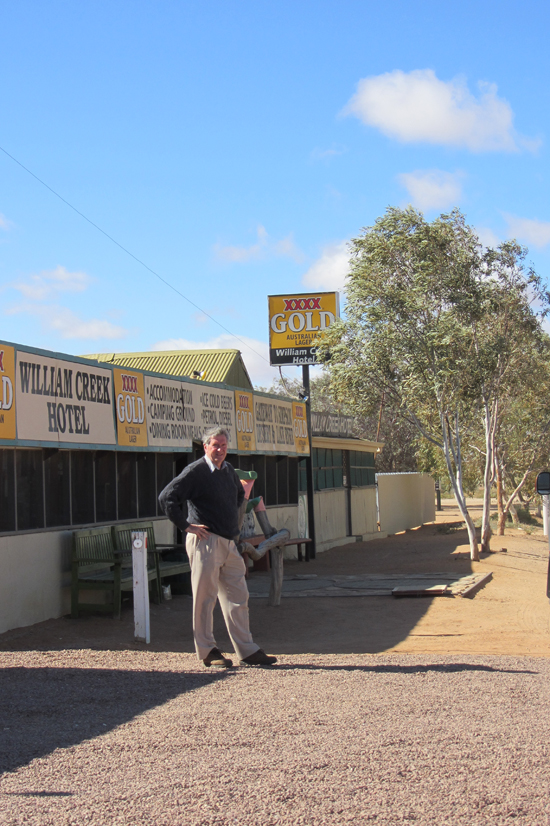
meant arrival at William Creek for a civilized lunch, again overcrowded for the
South Australian Electricians Conference; well that’s what they called it. More live sparks than conference but were
they having fun. Refueled then onto Oodnadatta
via the incredibly spectacular Mount Arkaringa (Painted Desert). Overnight at Oodnadatta in a donga was
comfortable but the place is a non event.
The Pink Roadhouse boss who also does the refueling slept in delaying
our departure, (fuel works out at close to $3/litre) but we still managed a
comprehensive fly-around Kings Canyon and Ayres Rock-Olgas and arrived at Sails
in the Desert just in time to make our sunset tour.
Hiring a car at
the Bungle Bungles was not an option so we booked an APT package for both The
Rock and Purnululu. We had both
previously been to The Rock but we enjoyed revisiting, particularly the sunset
dinner where we watched the sunset over The Rock followed by a gourmet dinner in
the sand dunes with linen, silver and fine wines. Our tour pace was leisurely and following
three nights at the Desert we left early for destination Bungle Bungles.
Our track took us
direct to the Wolfe Creek Meteorite Crater. We were well provisioned with
water, food and emergency beacons as this over the Tanami Desert. I was surprised at how inaccurate the WAC
charts were, missing vital ground features.
Alison noticed a vehicle parked in the scrub just off what was a major
dirt road, we recorded the lat/long as this road and others similar did not
appear on the current chart. Our GNSS
(GPS) took us right to the crater which was an amazing sight, from there we
flew to Halls Creek to refuel, cancel Sartime and report the possibly errant
vehicle. Then on to the Bungle
Bungles. We had made it a practice to
over fly all attractions before taking the ground tours and this worked well as
the Bungle Bungles are truly spectacular.
We spent more than an hour doing variations of SP4. We were met at Bellburn International airport
by APT and chauffeured to their campsite, luxury tented accommodation.
The Bungle
Bungles ground sightseeing is pretty much restricted to Echidna Chasm and Piccaninny
Creek (The Domes, Cathedral Gorge,
Piccaninny Walk viewing platform) walks, although those in need of a vigorous
days walk can try the18km trek to Piccaninny Gorge. A lot of the really spectacular areas are
restricted sacred sites, so on our departure and after consultation with
Slingair helicopters we again flew several varying laps of the area including
the helicopter route. We would highly
recommend this as these routes take you to areas not readily accessible from
the ground and perhaps even more stunning than the tourist treks.
Ever onwards to
Fitzroy Crossing and Geikie Gorge. We
were met at the airport and after loosely securing our superannuation fund,
taken to the hotel by Mark, who kindly offered us the use of his car should we
want to drive around town. Late in the
afternoon with winds forecast to pick up overnight we took up his offer and
returned to the aircraft to securely tie it down. We thought we would repay Mark’s generosity by
topping up his car’s tank at the one and only servo, then proceeded back the motel
on about 2 Km of straight “highway’. It
was after last light as we approached the motel and the red and blue flashing
lights on the vehicle behind us clearly hinted that we should pull over. The only available safe area was the motel
driveway, situated in front of the beer garden packed with new arrivals from a
coach tour. So in front of these thirsty
quaffers I was unceremoniously breathalised by the local gendarmerie. Fortunately I had only been petrol sniffing
and passed with unleaded colours!
Geikie Gorge tour
was interesting, and while staying at the motel we enjoyed the rare treat of a Michelin
chef at the motel restaurant.
After over flying
Windjana Gorge and Curtin AFB we landed at Broome for our three night
stay. Our highlights here were
Chinatown, Broome Museum, Gantheaume Point, the obligatory Cable Beach sunset
walk and some R & R.
Departing Broome
(now Class D airspace but with obliging ATC) we overflew the southern outskirts
of the town then followed the coast to Cape Leveque with its very dusty but
lengthy runway. Not on the WAC chart is
a long sealed runway only a few miles south of YCLQ and built for the offshore
rig traffic.
We enjoyed Cape
Leveque, in particular the oxide sandstone cliffs and the beach walks. Again we had ‘Luxury Tented Accommodation’
and again we found these to be more than adequate. And here again in the middle (or end) of
nowhere is a gourmet restaurant.
Our next day’s
flying was a long one. Down to Derby for
fuel before setting off for the Horizontal Waterfalls. Our timing was good for we had a 9 meter tide
and had planned our arrival for mid time between low and high tides. The water was flowing at good speed through
the channels. After several orbits we
set course to the Kings Cascades and Mount Trafalgar, both on the Prince Regent
River. These are pretty much enroute to
the Mitchell Falls and are also worth the odd orbit or three. Mitchell Falls is worth more than a few
orbits as it is quite a long and curved cascade with another large fall to the
east. Kalumburu was our overnight stop -
at the mission, interesting place with basic donga accommodation. This area was also attacked during WWII and
there are wrecked Hudsons off to the side of a now disused runway. If you can
avoid refueling here, do so. Barging
costs are $900/cubic metre so fuel is around $4.50/li.
Overflying King
George Falls we were surprised to see a small luxury cruiser at the base of the
falls with a helicopter approaching the ship’s helipad, so added this to the
bucket list. Not that we didn’t get a
great view of the falls before navigating onto Berkley Gorge then
Kununurra. Here we did some
investigation for the April 2013 Fly-In.
Not only is this a destination in its own right, but a great gateway to
all that the Kimberley region offers.
After an
exploratory flight around the Cockburn Ranges, Home Valley and Emma Gorge we
lined up on the approach to the dusty RW14 at El Questro. The three nights were
only just sufficient as there are plenty of tours: Zebedee Springs, El Questro,
Emma, Chamberlain and Explosion Gorges.
The lush rainforest areas, even in June, contrasted with the semi-dry
surrounding areas and this would be even more so as the dry season progressed.
Our next stop was
Tindal AFB and Katherine. All the
Restricted areas were active so we did the Victoria Highway run at 1500’ which activated
the 500’ warning system on several occasions!
Tindal ATC were helpful in giving us a clearance direct to Katherine
Gorge and then Edith Falls before an approach onto RW14.
Katherine Gorge
was a great tour, heaps of Johnson crocs amid spectacular rock gorges. Then onto Adels Grove where we met up with John
and Elaine Stuart. This was a dual
purpose stopover, enjoying John and Elaine’s company and checking out Adels as
a Fly-In destination. We canoed up the
gorge and despite several attempts to upend John in the river we only twice
succeeded. Adels has been added to the
list as the September 2013 Fly-In.
Obviously a lot more info to come on the Fly-In destinations.
So our holiday
ended with a refueling stop at Concurs, overnight Charleville, and then
Bankstown via Coonamble.
Some
after-thoughts:
Some areas that
we visited had Special Procedures that infer a high risk of a mid air
collision. We flew in May & June
(shoulder season) and found other traffic to be minimal or nonexistent. Helicopters generally operated below 500’
AGL, we gave them around 500’ clearance, and there were no issues.
Temperatures near
the coast were temperate. But inland it was very cold at night and tented
accommodation was well ventilated! Thermals and socks are the go for a good
sleep.
Used Oz Runways
extensively and rarely looked at paper charts.
Mentioned earlier that WAC charts were inaccurate, they have been
updated but not soon enough for us. And
how long ago were those dirt roads bulldozed?
We flew 22
sectors, 18 with headwinds, which added about 4 hours to our generic no wind
plan. To add insult to injury we flew IFR
Coonamble to Bankstown with headwinds to Wyatt.
Then from Wyatt to top of descent we had a groundspeed of 186 Kts. For 6
minutes - that’s flying!
Itinerary: Bankstown-Cobar-Tibooburra-William Creek-Oodnadatta-Ayres Rock-Halls Creek- Bellburn-Halls Creek-Fitzroy Crossing-Broome-Cape Leveque-Derby-Kalumburu-Kunanurra-El Questro-Tindal-Adels Grove-Concurry-Charleville-Coonamble-Bankstown.